Mosaic is a visual planning and resource management tool that connects the people, projects, and money side of your business in one place. Use it to manage tasks, plan project schedules, track time, staff your team, and watch fee budgets.
It's built for everyone — individual contributors, project managers, team leads, and owners — and each person's Mosaic looks different. What you see depends on the projects you're on and the access level your admin gives you.
At the core is a shared picture: who's working on what, when work is due, and where projects stand. Mosaic is comprised of 9 key spaces - we’ll review an overview of those below!
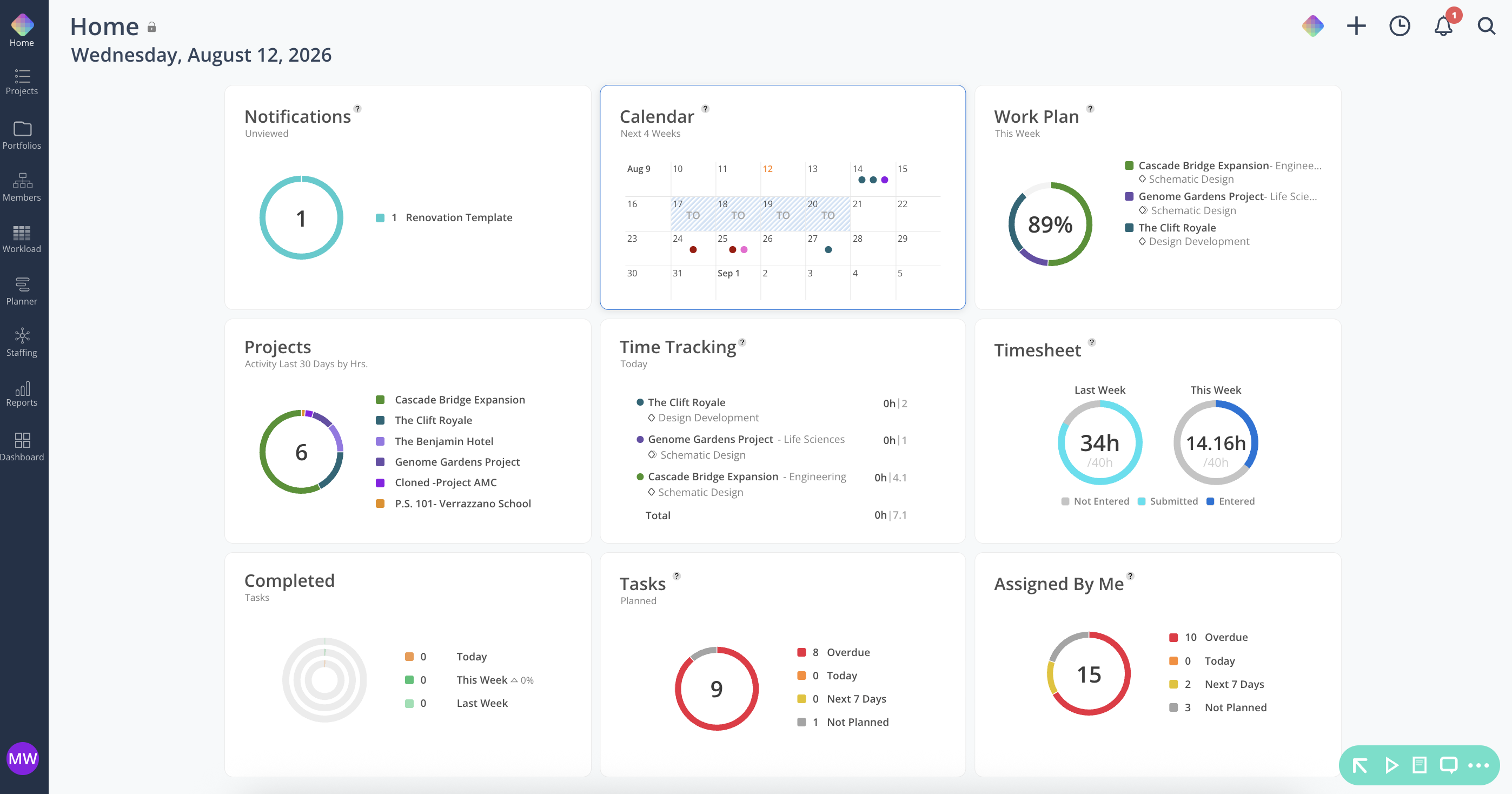
Your private space, and the first thing you see when you log in. Home shows your work plans, your assigned tasks, your project dates, and your time — nobody else sees your Home.
The bell icon in the top right turns red when you have a new notification. Notifications cover tasks, notes, budgets, schedules, and work plans.
Portfolios are the folders that organize every project. Most firms group them by department, discipline, client, scope of work, or partner-in-charge. Each project lives in exactly one portfolio.
We suggest 10+ projects per portfolio. Past about 100, consider splitting it up.
Open a project from Portfolios or from Projects in the left menu. Your Projects list shows your favorites, the projects you're a member of, your personal portfolio, and anything in the portfolios you can access.
Each project has its own space for schedule, tasks, notes, budget, and members.
Planner is the project view of your schedule — every project's phases, milestones, and work plans in one place. Filter by portfolio, department, or member, then drag and drop to keep dates current. Mosaic logs every change, so the Variance Report can show you later what moved and when.
Workload is the member view — resource planning, staffing, capacity, whatever your team calls it. You create work plans (time blocks on a project) and adjust them by dragging.
Unlike a plain calendar, Workload is based on real available time. It accounts for weekends, holidays, time off, and everything else already on someone's plate, so the plan reflects what can actually get done.
It's built to be looked at together. Put it on a screen during your planning meeting and update it live.
Track fee and hourly budgets against planned and spent time, monitor scope, and catch overruns while there's still time to act.
Reports give leadership the numbers to run the business — what happened, where things stand, and what's coming. Timesheet, Workload, Utilization, Time Budget Tracking, Demand, and Variance reports are all available, and dashboards let you distribute them without anyone having to go looking.
Three habits get a team up and running faster than anything else.
1. Plan the work. Set up a recurring planning meeting and build work plans together, a week or two at a time. If resource planning is new to you, start short-term and add longer-range plans as projects kick off.
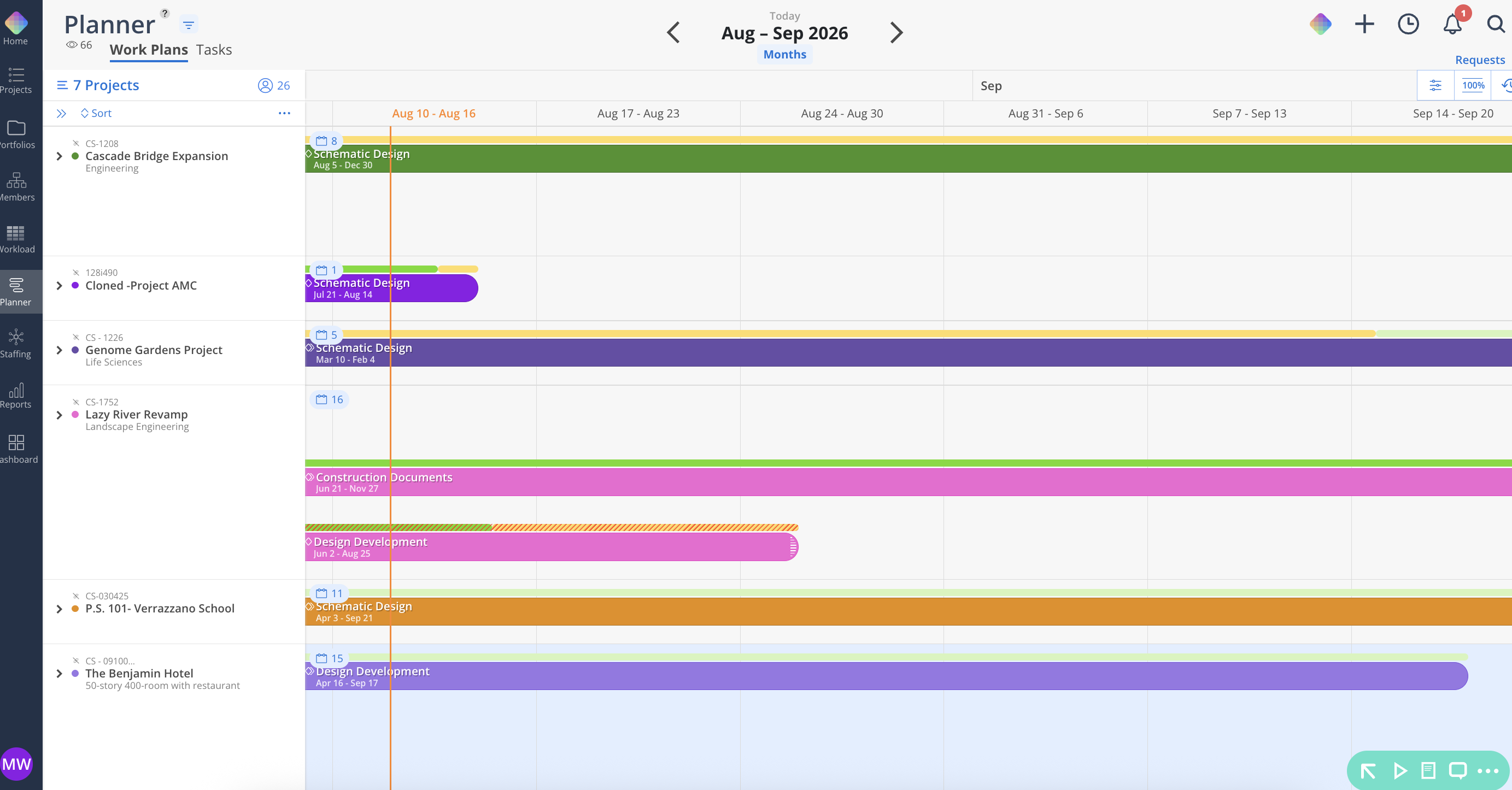
Already comfortable with resource planning? Plan long-term from Planner's project view instead.
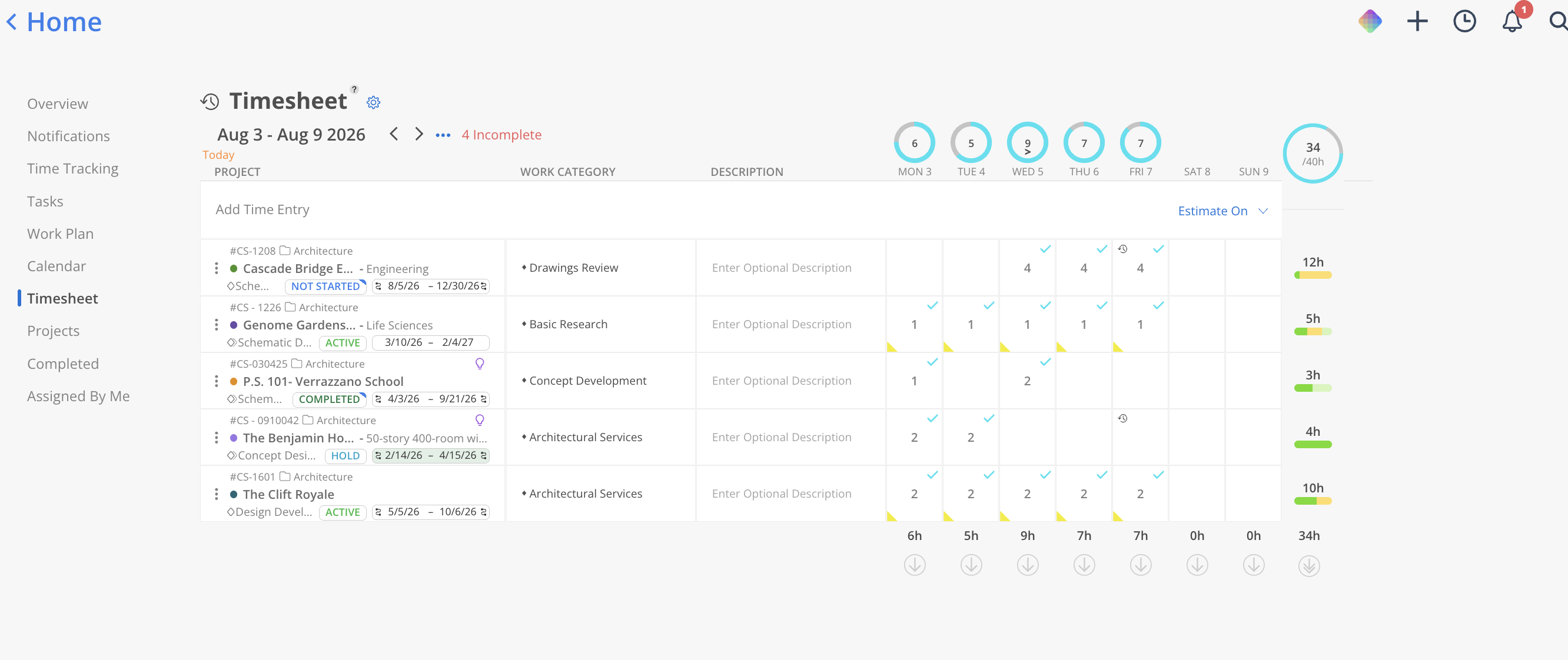
2. Track time. Everyone logs what they worked on. It takes a minute a day and it's what makes every report downstream trustworthy.
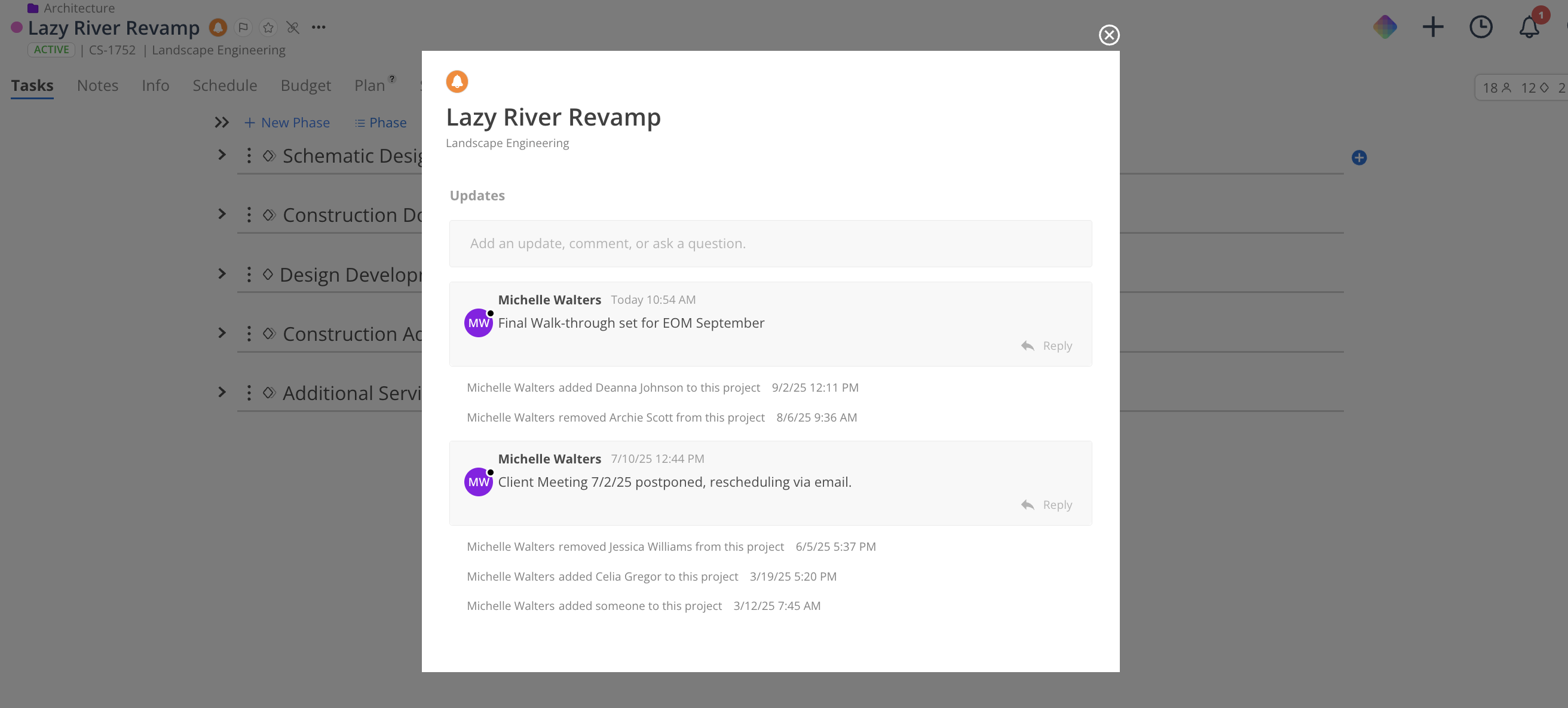
Post project updates weekly. Have PMs update their projects before your status meeting, then run the meeting from the portfolio view. The whole team can see every active project's status in one pass.