This is the best place to go when you want to answer questions like:
Who has availability next week?
Who is already heavily booked?
Where do we have gaps or bottlenecks across the team?
How will time off affect team capacity?
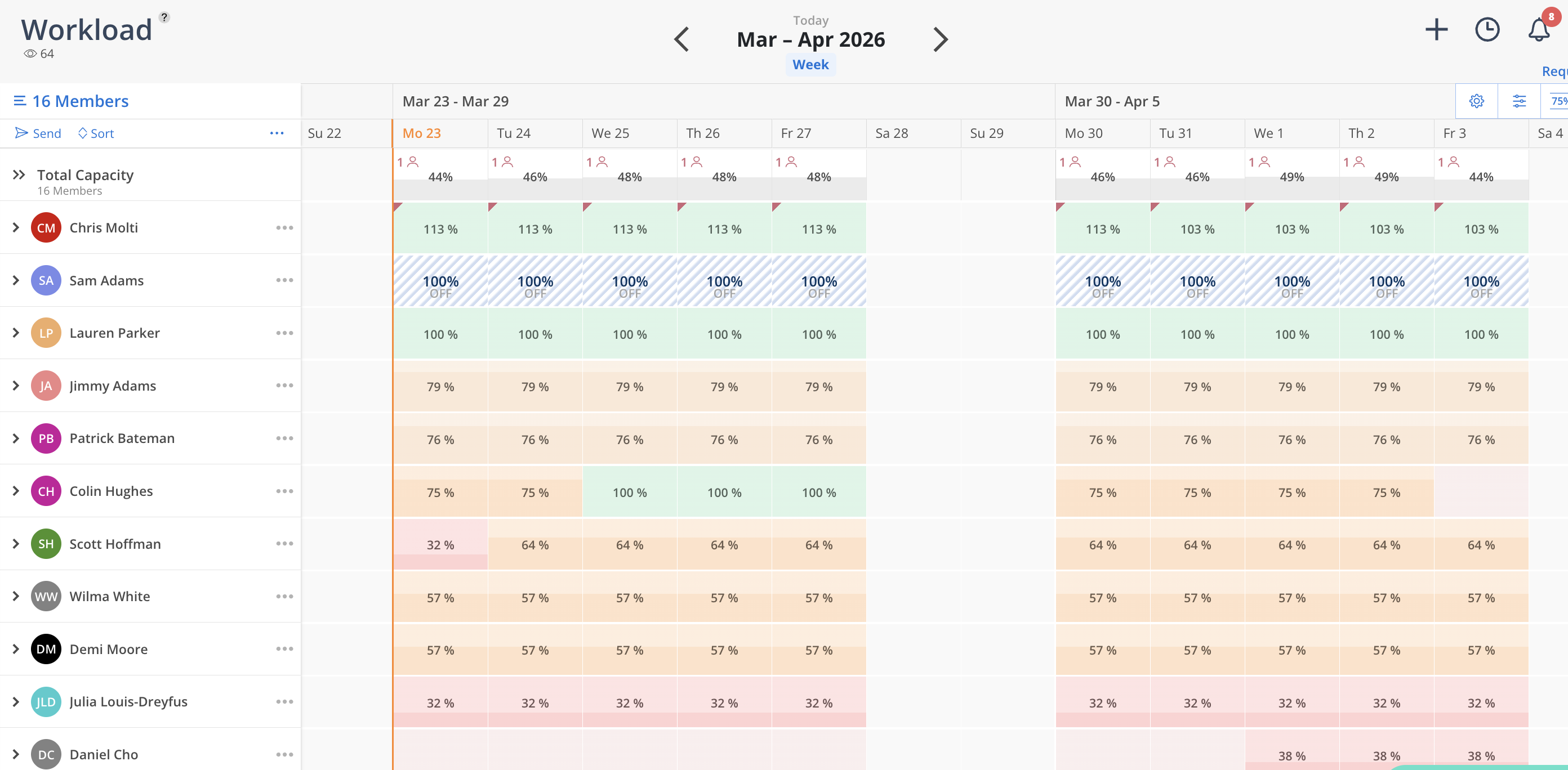
In the Workload space, each row represents a team member and the calendar view shows their scheduled work over time.
As your team starts building work plans in Mosaic, the heat map will help you quickly identify:
Available capacity
Over-utilization
Tentative work
Time off
Company holidays
This makes Workload especially helpful for leadership, resource managers, and anyone responsible for balancing work across the team.
When you first open the Workload space, begin by selecting the team members you want to view from the left sidebar.
You can:
Select everyone
Search for a specific person
Filter by saved member attributes, such as role, department, or discipline
View Roles instead of Members (to see open work)
Once members or roles are selected, the calendar will load their schedules.
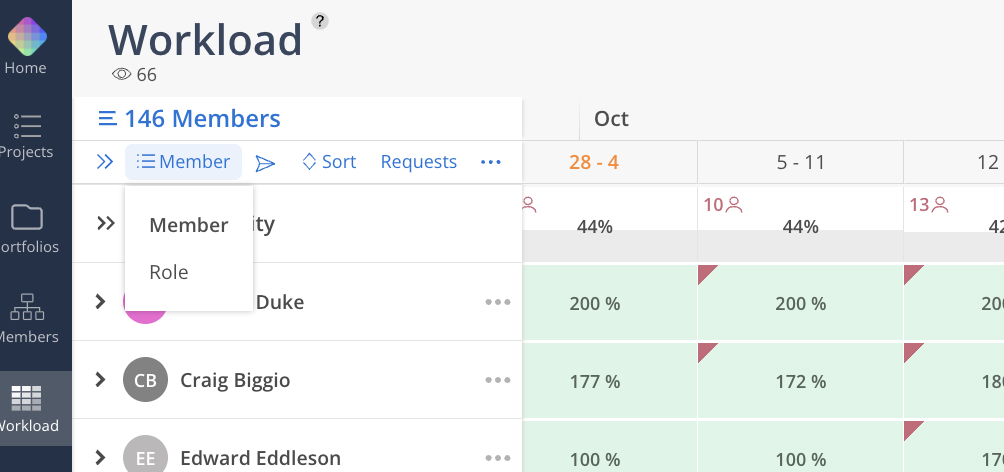
The Workload heat map helps you understand how much of each person’s capacity is already being used.
Depending on your settings, you can view workload by:
Percent of capacity
Percent of Availability
Planned hours
Available hours
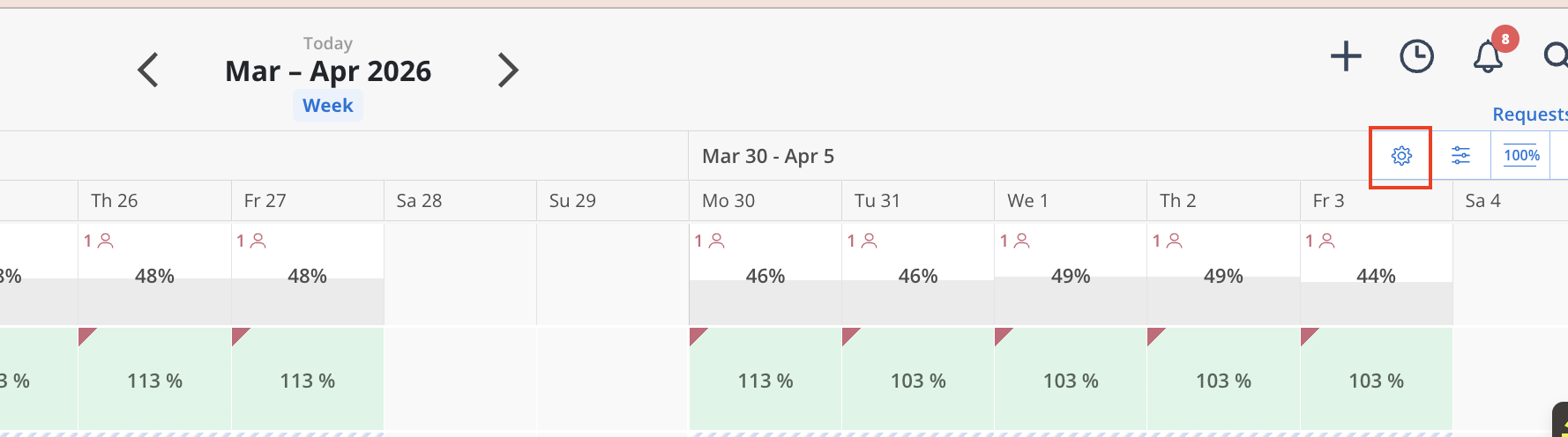
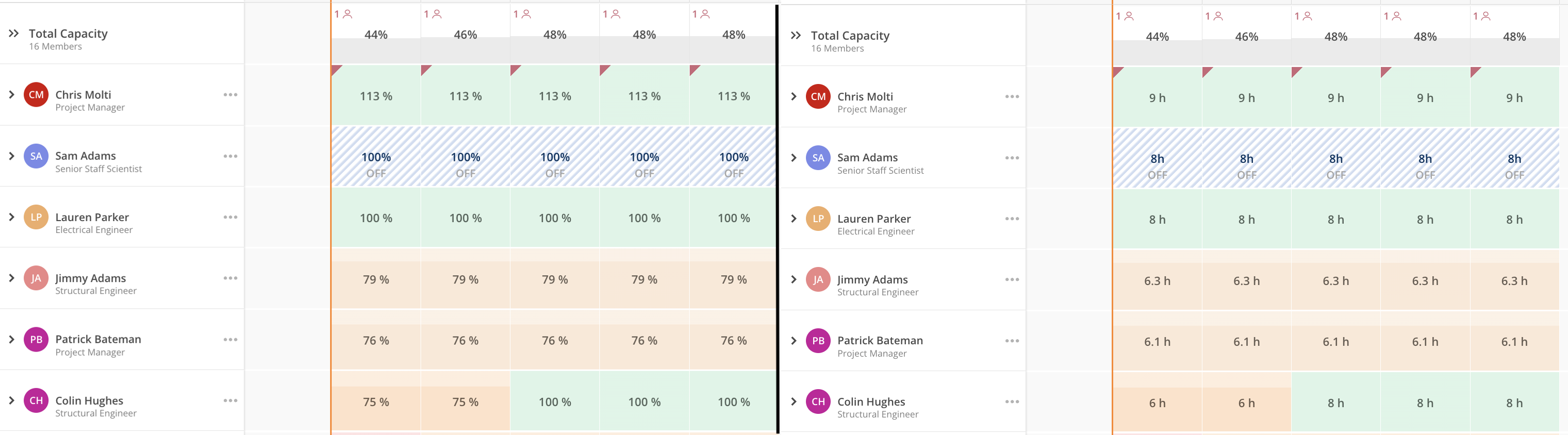
💡 Many leaders prefer to view the heat map as a percentage, while project managers often prefer to see actual hours.
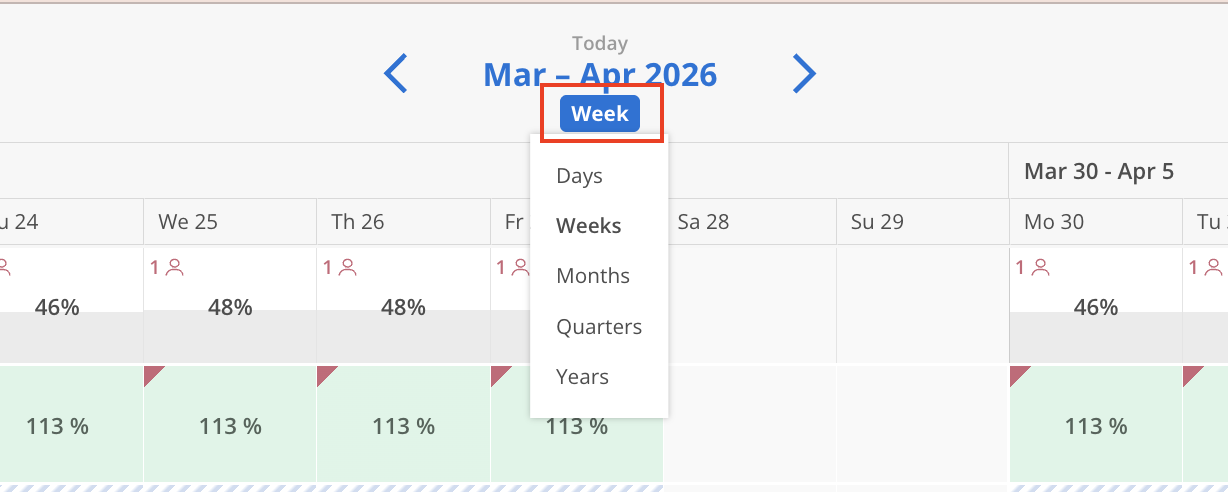
You can also adjust the calendar view to zoom in or out depending on whether you want to review daily, weekly, or monthly capacity.
Work plans are the foundation of both the Workload and Planner spaces. A work plan is the scheduled amount of time a person is expected to spend on a project or phase.
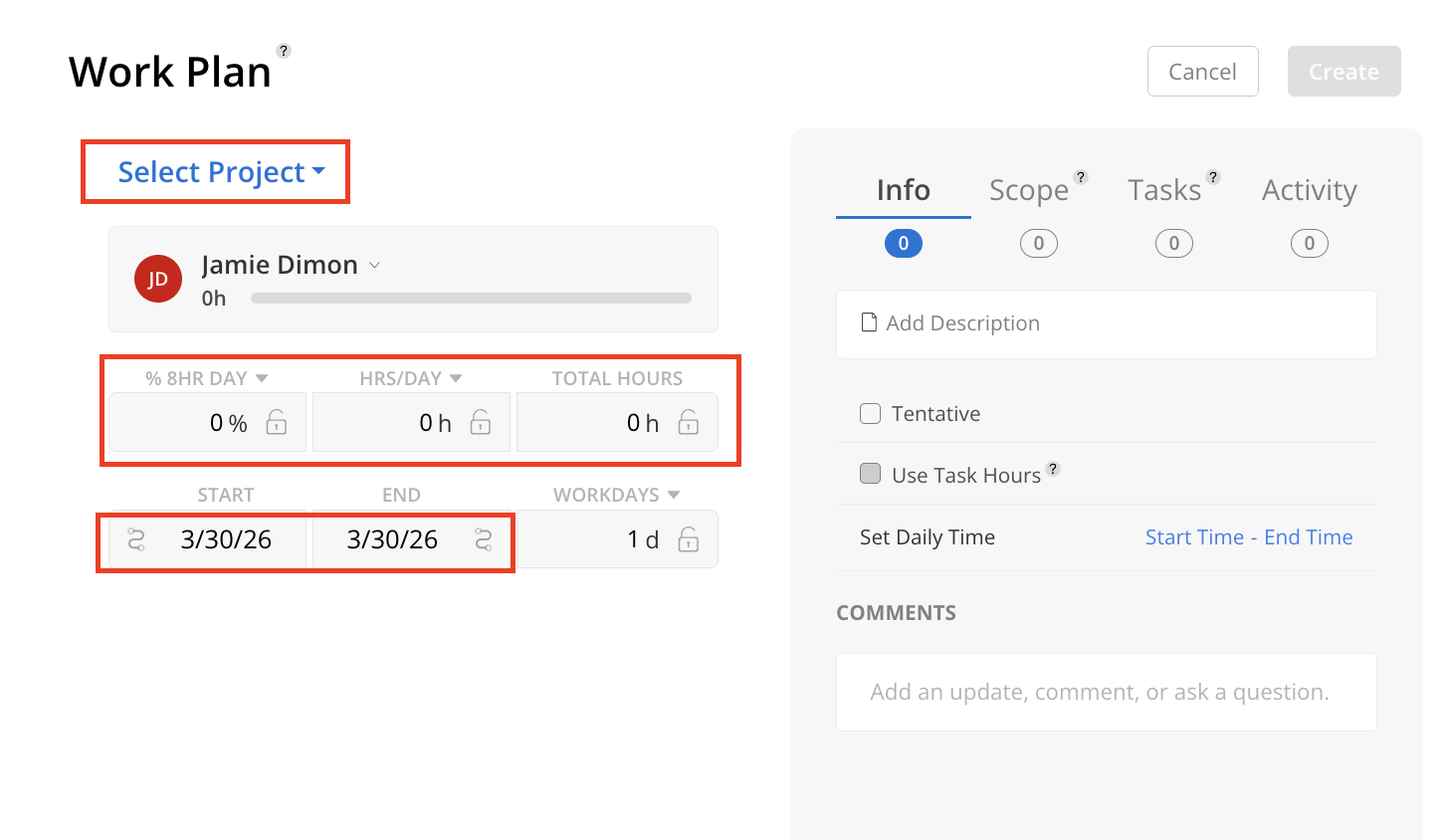
To create a work plan in Workload:
Open a member’s row
Click on an open area of the calendar
Select the project
Choose the phase
Enter how you want to plan the work
Set the start and end dates
Save the work plan
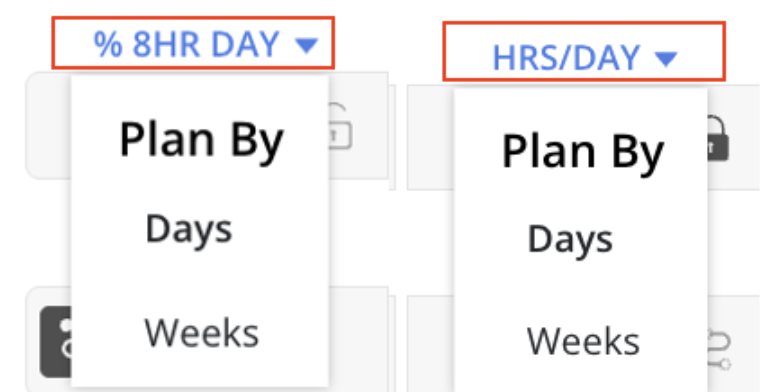
Mosaic gives you flexibility in how you build work plans. You can plan using:
Percent of day
Percent of week
Hours per day
Hours per week
Total hours
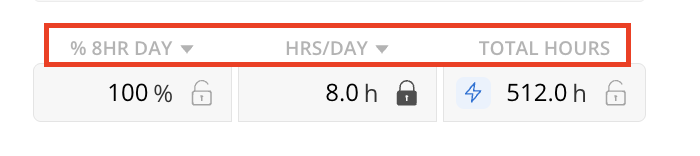
The lock icon indicates which planning source is currently active.
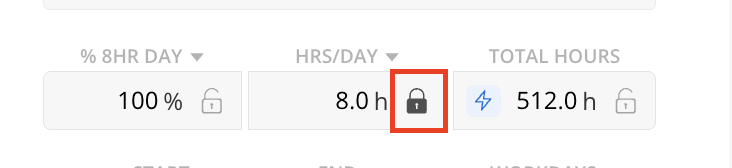
💡 For teams that typically plan at a higher level, hours per week or total hours is often the simplest way to get started.
For example, if someone is expected to spend 4 hours per week on a project, you can create a weekly work plan and schedule it across a date range.
Once a work plan is created, it is easy to update.
You can:
Drag and drop the plan to a new date
Extend or shorten the plan
Move the plan to another team member
Copy the plan to multiple team members
Split the plan into separate time periods
Add comments for collaboration
Mark the plan as tentative
This makes it easy to adjust staffing as schedules shift.
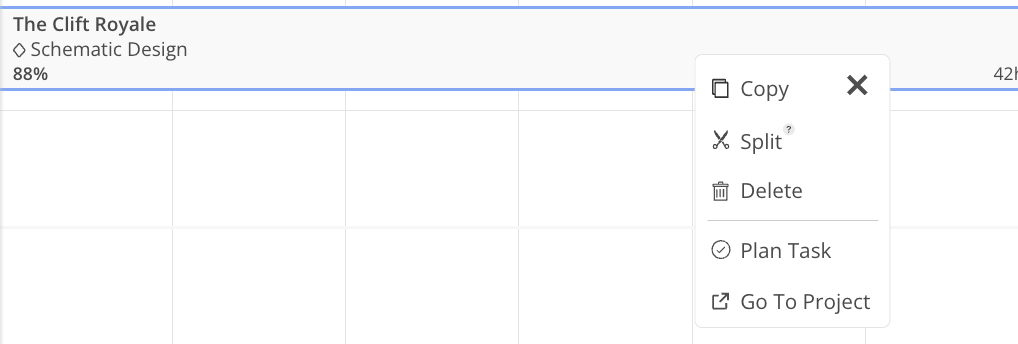
If you are planning proposal projects or not ready to fully commit work to someone’s schedule, you can mark a work plan as tentative.
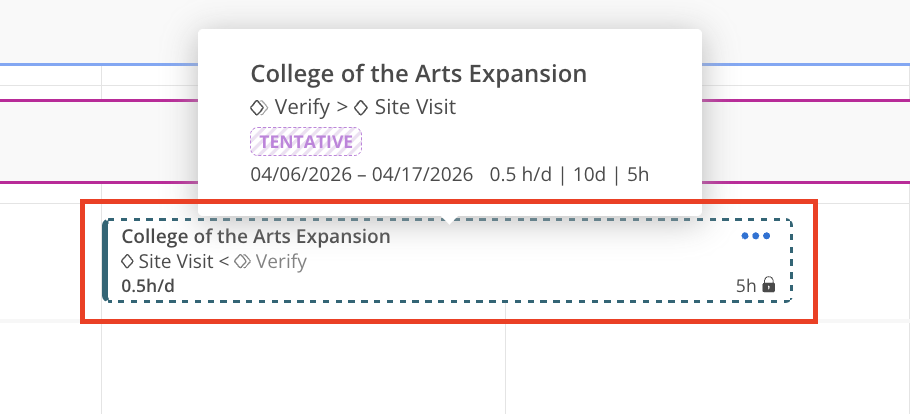
Tentative plans are useful when:
Planning a proposal project
A person may take on future work, but it is not final
You want to test the impact of upcoming assignments before committing them
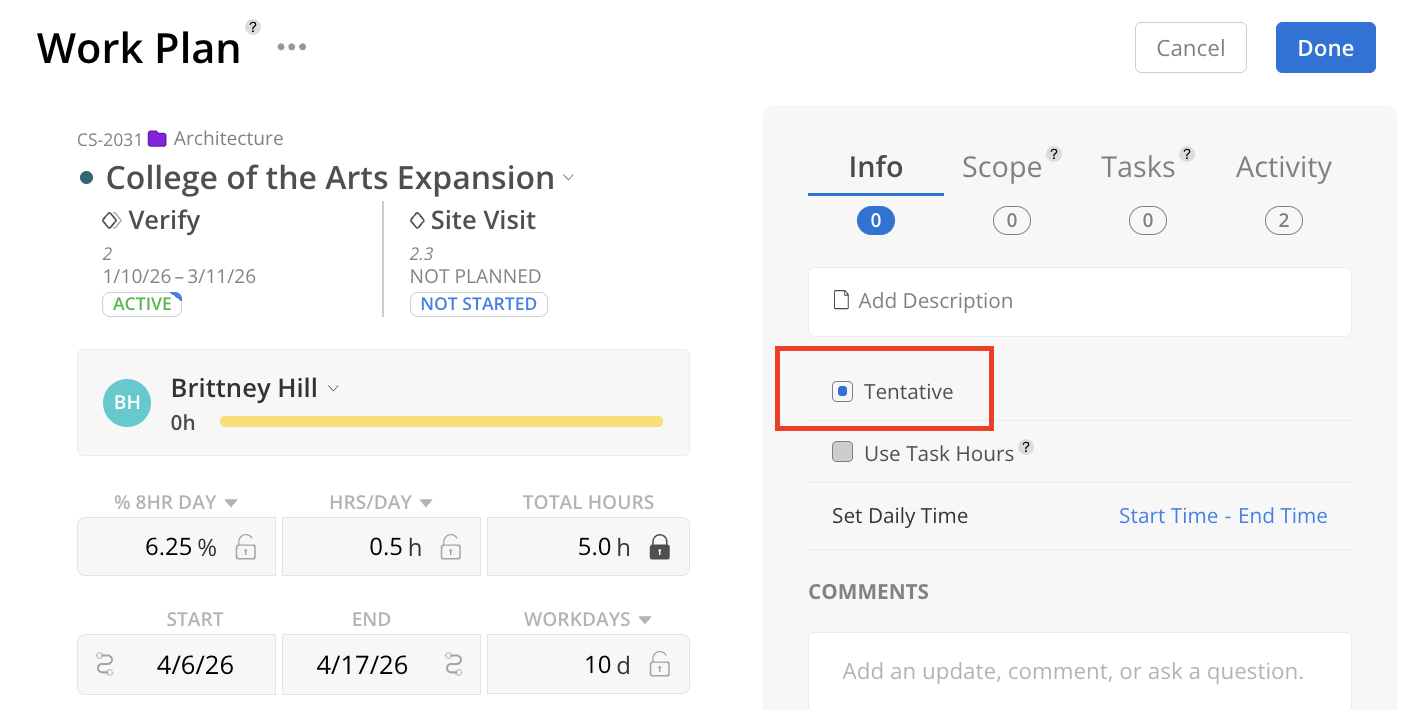
You can then show or hide tentative plans to understand how they affect capacity.
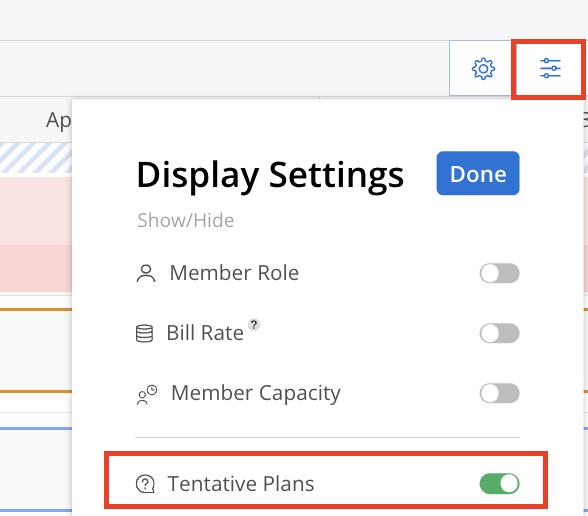
The Workload space also helps you account for team availability by showing time off directly on the schedule.
To add time off:
Create a new work plan
Select the system created Time Off project
Choose whether it is a full day or partial day
Save the entry
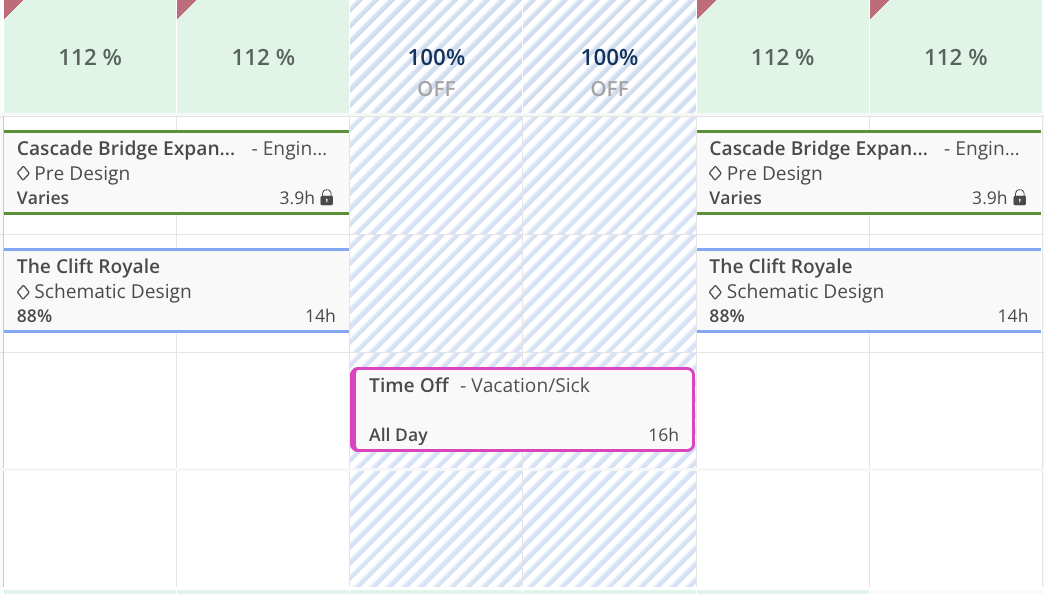
In addition to individual time off, company holidays can also be added at the organization level so they automatically appear for everyone.
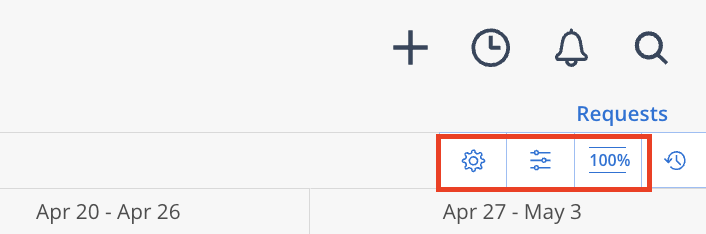
Each user can adjust their own Workload settings without affecting anyone else.
Common view options include:
Switching between percent and hours
Showing or hiding timesheet data
Turning on default weekly planning
Adjusting row height
Showing or hiding details like role and capacity
Updating heat map colors
This allows each person to tailor the space to the way they prefer to plan.
The Workload space includes an activity log so you can see updates to work plans over time, including who created or changed a plan.
This is especially helpful when multiple people are collaborating on staffing and scheduling.
When your team is first adopting Mosaic, start simple.
A good first step is to:
Build plans for the next two weeks
Focus on active projects
Add upcoming time off
Use weekly hours if daily planning feels too detailed
Review the heat map regularly to identify overbooked or underutilized team members
As more plans are added, the Workload space becomes a much stronger tool for proactive resource management.
